

Table of Content
- Who Can Use Online Gaming Merchant Accounts?
- What Are the Requirements for an Online Gaming Merchant Account?
- What Do Payment Providers Review When Assessing an iGaming Business?
- Why Do Online Casinos and Gambling Businesses Need Specialized Payment Processing?
- Key Payment Challenges for Online Casinos and iGaming Businesses
- Choosing the Right Merchant Account for Online Casinos and iGaming
Online Gaming Merchant Accounts are designed to help eligible iGaming businesses accept card payments and manage transactions through specialized payment processing solutions. Because online gaming and gambling businesses are often considered high-risk, they may face additional underwriting, compliance, fraud and chargeback requirements compared with standard online businesses.
In addition, a suitable merchant account can give eligible iGaming businesses access to reliable payment acceptance.while supporting their operational and settlement requirements. However, the right payment setup depends on factors such as the business model, target markets, transaction volume, customer location and applicable regulations.
In this guide, we explain how Online Gaming Merchant Accounts work, what iGaming businesses may need during the application process, common payment challenges, and the key factors to consider when choosing a payment processing provider.
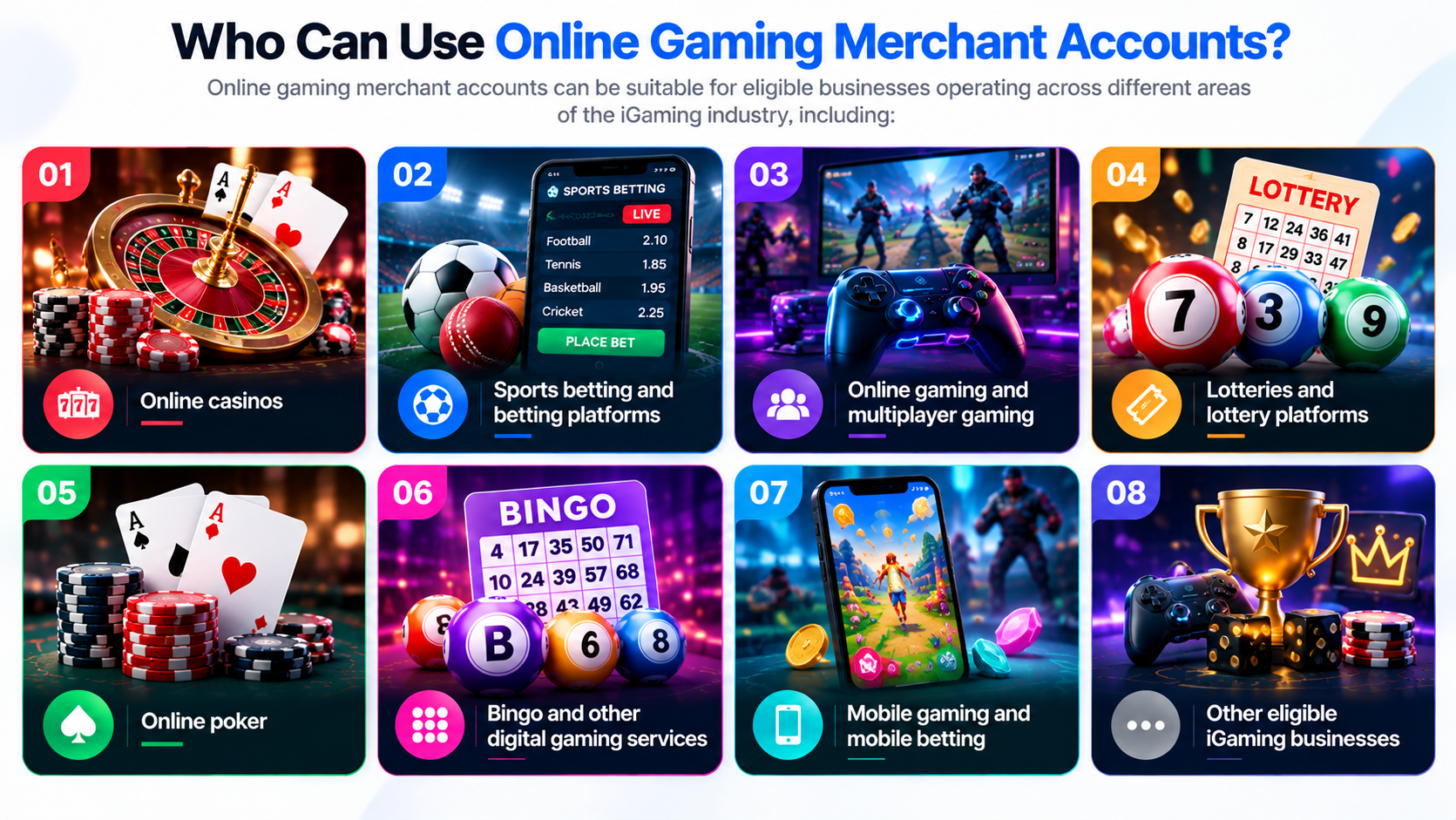
Who Can Use Online Gaming Merchant Accounts?
For example, online gaming merchant accounts can be suitable for eligible businesses operating across different areas of the iGaming industry. Depending on the business model, jurisdiction and payment requirements, this may include online casinos, sports betting, betting platforms, lotteries and other regulated gaming services.
What Are the Requirements for an Online Gaming Merchant Account?
In general, applying for an online gaming merchant account typically involves business, ownership, compliance and payment-processing information. Requirements can vary depending on the business model, target markets, transaction volume and the provider’s underwriting process.
Requirements list
- Valid business registration and company information
- Business owners, directors and beneficial ownership details
- Government-issued identification for relevant business owners or directors
- Business website and a clear description of the products or services offered
- Expected transaction volume, average transaction value and target markets
- Processing history or recent payment statements, where applicable
- Bank account and settlement information
- Relevant licensing, regulatory and compliance documentation, where applicable
- Information about fraud prevention and chargeback management practices
Paympire does not guarantee merchant account approval, as approval depends on the business model, target markets, compliance requirements and the underwriting process. We aim to make the application process clear and straightforward by helping eligible businesses understand the required information and payment processing options.
What Do Payment Providers Review When Assessing an iGaming Business?
Payment providers and acquiring partners may review several factors when assessing an iGaming business. These can include the company’s business model, ownership structure, operating history, target markets, licensing status and approach to fraud and chargeback management.
Key factors that may influence the risk assessment include:
- Business model and type of iGaming services offered
- Target countries and customer markets
- Licensing and regulatory status
- Transaction volume and average transaction value
- Fraud prevention and chargeback management
- Business ownership, operating history and compliance profile
In addition, businesses can improve their readiness for payment provider assessment by keeping company, ownership, licensing and financial information accurate and up to date. A clear description of the business model, target markets, transaction expectations and compliance procedures can also help support the underwriting process.
Furthermore, maintaining effective fraud prevention, chargeback management and compliance procedures can help an iGaming business demonstrate responsible payment operations. Final processing terms, transaction limits and reserve requirements depend on the provider, acquiring partner, business model and overall risk assessment.
 Key Payment Challenges for Online Casinos and iGaming Businesses
 Key Payment Challenges for Online Casinos and iGaming Businesses
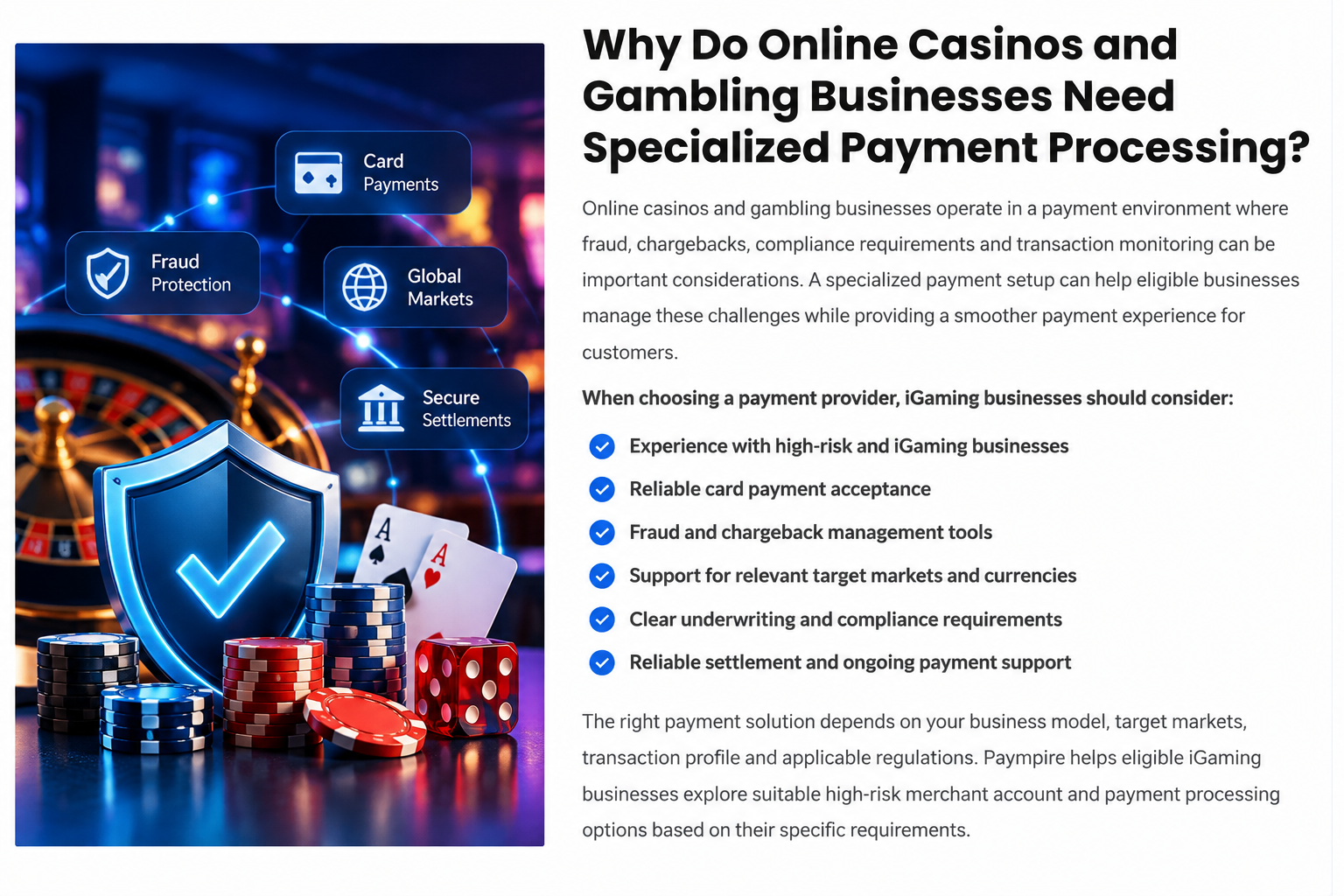
Online casinos and iGaming businesses can face several payment challenges as they operate in a higher-risk environment. Understanding these challenges can help merchants choose a payment setup that is better suited to their business and customers.
- Higher fraud and chargeback exposure — Gaming transactions can attract fraudulent activity and customer disputes, making effective risk management important.
- Regulatory and compliance requirements — Requirements can vary by jurisdiction, licensing structure and business model.
- Payment acceptance limitations — Some traditional payment providers may have restrictions on higher-risk gaming businesses.
- Settlement and transaction management — Growing businesses need payment solutions that can support their transaction volumes and operational requirements.
Therefore, choosing an experienced payment provider can help eligible iGaming businesses navigate these challenges and identify payment options aligned with their business model and target markets.

Choosing the Right Merchant Account for Online Casinos and iGaming

The right merchant account can play an important role in helping an online casino or iGaming business accept payments efficiently and manage its ongoing payment operations. However, not every payment solution is suitable for every gaming business.
When evaluating a merchant account provider, iGaming businesses should consider:
- High-risk processing experience — Look for a provider familiar with online casinos, gaming and other higher-risk business models.
- Payment methods and market coverage — Consider whether the available payment options support your target customers and markets.
- Fraud and chargeback controls — Effective risk-management tools can help reduce payment-related losses and disputes.
- Settlement options — Review settlement currencies, timelines and account requirements before choosing a provider.
- Compliance and underwriting — Make sure your business can meet the provider’s documentation, licensing and compliance requirements.
- Ongoing support — Responsive payment support can be important when managing a high-volume online gaming operation.
Ultimately, the best solution depends on your business model, target markets, transaction profile and regulatory requirements.
Looking for an online gaming merchant account?
Paympire helps eligible online casinos, gambling businesses and iGaming operators explore high-risk merchant account and payment processing solutions based on their business model, target markets and payment requirements.
Contact Paympire to discuss your iGaming payment needs and available options.